Ureteric Stent
What is it?
Source: Memorial Sloan Kettering
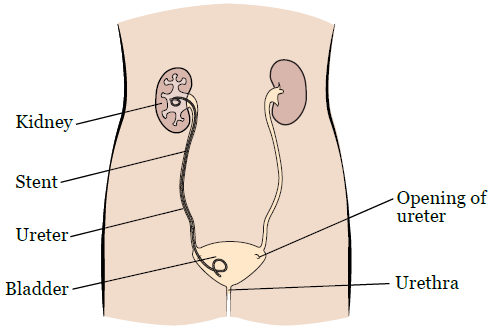
A ureteric stent is a small, soft plastic tube placed inside the body to help urine flow from the kidney to the bladder. It is used when urine flow is blocked or needs support while the urinary tract heals.
The stent sits inside the ureter, which is the tube that connects the kidney to the bladder. One end rests in the kidney and the other in the bladder. The stent cannot be seen from outside the body.
A ureteric stent is usually placed during a procedure in the hospital while you are asleep. No cuts or incisions are needed. The stent may stay in place for a short time or longer, depending on your condition.
Preparation
Stents are usually placed during a planned procedure (such as a ureteroscopy) or in an emergency setting if there is a blocked kidney. Your Urologist will explain the reason for your stent
If your stent is being placed as part of a planned procedure, follow the preparation instructions for that procedure
Post Procedure
Most people experience some bladder irritation while a stent is in place. This includes burning with urination, urinary urgency and frequency, and blood in the urine
Mild flank discomfort during urination is common - this happens because urine briefly travels up the stent toward the kidney when you void
Drinking plenty of water and clear fluids helps reduce these symptoms
Tylenol is preferred for pain control. NSAIDs may be used unless Dr Dhanjani has said otherwise.
You may carry on with normal activities. Heavy exercise may worsen stent-related symptoms but will not damage the stent
Stents are temporary. Make sure to keep your follow-up appointment for stent removal. A stent that is left in too long can cause significant complications
If you develop fevers, severe pain, inability to urinate, heavy bleeding with clots, or feel generally very unwell while your stent is in place, seek urgent medical attention through your primary care provider, urgent care, or the ER.